Elevate Your Holiday Crafts with a Stunning Ornament Rose Pattern
The holiday season brings a unique desire to create something personal and lasting. Whether you are a seasoned crafter, a small business owner looking to expand your product line, or a parent wanting to make special keepsakes with your children, the details matter immensely. One of the most elegant ways to achieve a professional look is by utilizing a high-quality Ornament Rose Pattern. These designs offer a timeless aesthetic that blends classic floral beauty with festive cheer. However, simply finding a pretty image online is often where things go wrong. Many creators rush into printing without understanding the technical requirements, leading to disappointing results that waste time, money, and materials.
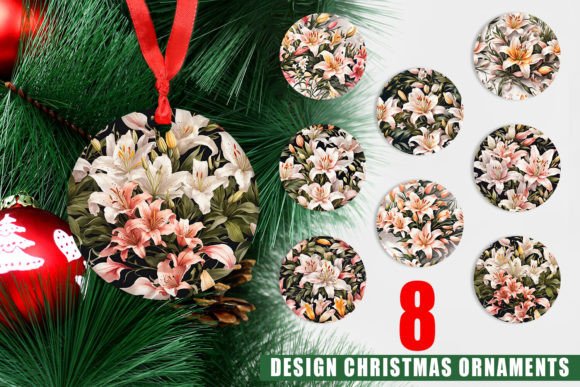
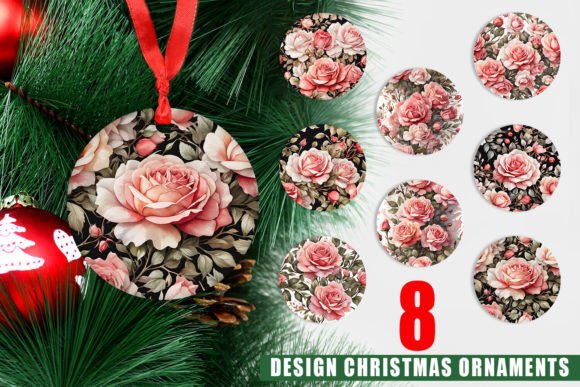
An Ornament Rose Pattern set typically features intricate floral motifs arranged within circular frames, designed specifically for Christmas tree decorations. When executed correctly, these patterns transform plain wood, ceramic, or paper baubles into sophisticated art pieces. The appeal lies in the versatility; a rose design can feel vintage, modern, or rustic depending on how it is applied. Yet, the difference between a craft project that looks homemade in a negative way and one that looks handcrafted with care often boils down to file quality and preparation.
Common Pitfalls in Selecting Digital Designs
One of the most frequent mistakes creators make is overlooking resolution specifications. You might find a beautiful rose illustration on a free stock site, but if it is only 72 DPI (dots per inch) and sized for web use, it will look pixelated and blurry when printed. This is especially critical for circular ornaments where fine lines and delicate petal details are prominent. A low-resolution image might look acceptable on your computer screen, but once it hits the printer, the lack of clarity becomes obvious. This error affects not just the visual appeal but also the perceived value of your work, which is crucial if you are selling these items or giving them as gifts.
Another common misunderstanding involves file formats. Many beginners download JPEGs thinking they are sufficient for all projects. While JPEGs are great for photos, they often introduce compression artifacts—those faint, blocky noises around sharp lines—that can ruin the crisp edges of a vector-style rose pattern. For printing, especially on materials like sublimation blanks or high-quality cardstock, you need clean lines. This is why a set of PNG files is often superior. PNGs support transparency, allowing you to place the rose design over colored backgrounds or textured surfaces without an unsightly white box surrounding the image.
Furthermore, people often ignore the aspect ratio and dimensions until it is too late. If you purchase or download a design that isn't already sized for your specific ornament blank, you may end up stretching the image to fit. Stretching distorts the roses, making them look elongated or squashed, which destroys the artistic integrity of the pattern. It is far better to start with files that are pre-sized for standard ornament dimensions, such as 5x5 inches, ensuring the design fits perfectly without manual manipulation that degrades quality.
The Impact of Poor Preparation on Your Results
When you skip the step of verifying file specs, the consequences ripple through your entire workflow. Imagine spending hours cutting out wooden discs, sanding them smooth, and applying a base coat, only to print your design and find the colors are dull or the lines are jagged. This leads to material waste and frustration. For entrepreneurs, this can mean lost inventory and unhappy customers who expect a polished product. For hobbyists, it kills the joy of creation. The cost of re-printing and re-doing work always exceeds the time taken to check the file properties initially.
Additionally, using the wrong file type can complicate the layering process. If you are using cutting machines like Cricut or Silhouette, or even just arranging elements in software like Canva or Photoshop, a file without a transparent background requires extra steps to remove. This increases the risk of accidentally cutting off parts of the rose petals or leaving behind halos of white pixels. These small errors accumulate, making the final assembly tedious and the result less professional.
How to Choose and Use High-Quality Assets
To avoid these issues, always prioritize high-resolution assets. Look for designs that explicitly state they are 300 DPI. This is the industry standard for print quality. A file size of 1500x1500 pixels at 300 DPI ensures that every curve of the rose and every leaf vein remains sharp, even when viewed up close on a glossy or matte surface. When evaluating a potential download or purchase, check the product description for these specific metrics. If they aren't listed, it is safer to assume the quality may not meet professional standards.
A practical approach is to seek out bundled sets that offer variety. A single design might be lovely, but a set of 8 circular decorative designs gives you the flexibility to create a cohesive yet varied look on your tree. This variety prevents the monotony of repeating the exact same image twelve times. It allows you to mix and match, perhaps using darker roses on one ornament and lighter, more delicate buds on another, creating visual interest and depth in your holiday decor.
- Verify Transparency: Ensure the PNG files have transparent backgrounds so you can layer them effortlessly over any color or texture.
- Check Dimensions: Confirm the files are sized appropriately, such as 5x5 inches, to match standard ornament blanks without resizing.
- Inspect Details: Zoom in on the preview images to ensure the rose patterns have clean edges and no pixelation.
- Consider Usage Rights: If you plan to sell your finished ornaments, make sure the license allows for commercial use.
Maximizing Efficiency with Printable Designs
Using a dedicated printable design set streamlines your production process. Instead of spending hours designing from scratch or hunting for individual elements that don't match, you have a ready-to-use collection. This efficiency is invaluable during the busy holiday season. You can print multiple sheets at once, cut them out, and apply them using decoupage glue, heat transfer for sublimation, or adhesive vinyl methods. Because the designs are pre-circular, alignment becomes much easier, reducing the time spent on trimming and positioning.
For those using sublimation printers, the quality of the source image is paramount. Sublimation reveals every flaw in the original file. A high-quality Ornament Rose Pattern in PNG format ensures that the ink transfers smoothly, resulting in vibrant colors that do not fade or blur. This method is particularly popular for creating durable, dishwasher-safe ornaments that can be cherished for years. By starting with the right digital foundation, you guarantee that the physical product stands the test of time.
Ultimately, the goal is to create something beautiful that brings joy. Taking the time to understand the technical side of digital assets empowers you to focus on the creative side. Whether you are making gifts for family, decorating your own home, or building a seasonal product catalog, the right tools make all the difference. Avoid the trap of settling for "good enough" images. Invest in high-resolution, properly formatted designs that respect the intricacy of the rose motif. By doing so, you elevate your crafts from simple DIY projects to stunning works of art that capture the true spirit of the season.
Remember, the devil is in the details. A crisp, clear rose pattern on a perfectly round ornament speaks volumes about your attention to detail and craftsmanship. It shows that you care about the outcome. So, before you hit print, take a moment to review your files. Check the DPI, confirm the transparency, and ensure you have a diverse set of designs to work with. This small investment in preparation pays off in the form of professional results, satisfied recipients, and a much more enjoyable crafting experience.