Elevating Design Projects with Decorative Lace Frames and Intricate Lace Circle Borders
In the rapidly evolving landscape of digital design, there is a persistent and growing appreciation for elements that blend traditional craftsmanship with modern utility. While minimalism has dominated user interfaces and branding for the past decade, a counter-movement is emerging. Creators, entrepreneurs, and marketers are increasingly seeking textures and details that evoke warmth, heritage, and sophistication. This shift brings Decorative Lace Frames and Intricate Lace Circle designs back into the spotlight, not as relics of the past, but as versatile assets for contemporary visual storytelling.
These digital assets serve a critical function in a designer's toolkit. They provide an immediate layer of elegance to otherwise flat compositions. Whether used for wedding invitations, boutique product packaging, social media highlights, or educational certificates, lace patterns offer a level of intricacy that is difficult to replicate from scratch without significant time investment. The relevance of these designs lies in their ability to bridge the gap between high-end custom illustration and accessible, scalable digital resources.
The Convergence of Tradition and Digital Workflow
The modern creative workflow demands speed without sacrificing quality. Professionals ranging from freelance graphic designers to small business owners often operate under tight deadlines. Historically, incorporating complex lace motifs required hand-drawing or sourcing low-resolution images that would pixelate when printed. Today, the availability of high-quality vector files has transformed this process.
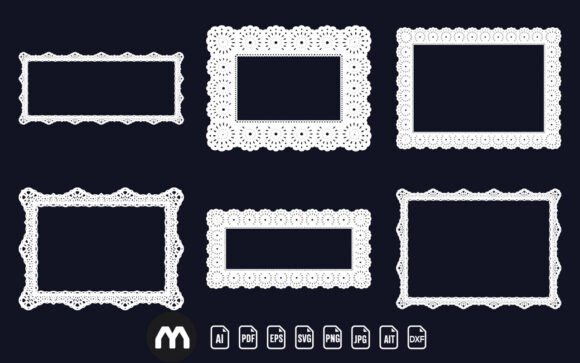
When we discuss Decorative Lace Frames and Intricate Lace Circle Borders SVG product details, we are referring to a suite of files designed for maximum compatibility and precision. The inclusion of formats like AI, EPS, SVG, PDF, and DXF ensures that these graphics can be integrated into virtually any software ecosystem. For instance, a marketer using Canva might rely on the SVG or PNG versions for quick social media posts, while a professional print designer working in Adobe Illustrator will utilize the AI or EPS files to scale the lace border to billboard size without losing a single detail.
This versatility addresses a key market preference: the need for "one-stop" digital solutions. Users no longer want to purchase separate files for web and print. A comprehensive download that includes vector sources alongside rasterized versions (like high-resolution JPEGs) streamlines the production pipeline. It allows a creator to start a project on an iPad, refine it on a desktop, and send it to a professional printer, all using the same core asset.
Why Vector Precision Matters for Intricate Designs
Lace is defined by its complexity. The interplay of negative space, fine lines, and repetitive geometric or floral patterns requires a file format that can handle minute details. This is where the distinction between raster and vector becomes paramount. Raster images, such as standard JPEGs or PNGs, are made of pixels. When enlarged, they become blurry or jagged. In contrast, vector files (AI, EPS, SVG, DXF, PDF) use mathematical paths to define shapes.
For Decorative Lace Frames, this means the delicate loops and curves remain crisp whether the frame is two inches wide on a business card or two feet wide on a banquet backdrop. The fact that these graphics are created with Adobe Illustrator guarantees a level of professional cleanliness in the anchor points and paths. This technical quality is essential for users who intend to use these designs for cutting machines (like Cricut or Silhouette) via the DXF or SVG files, or for high-fidelity offset printing.
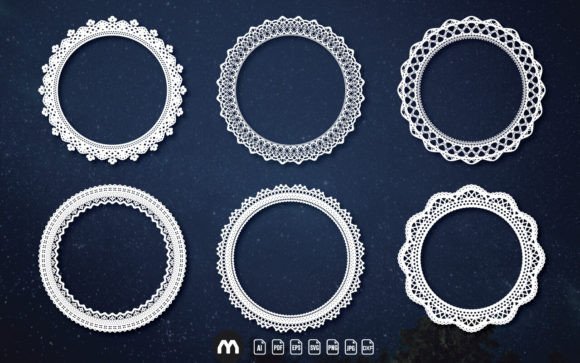
Furthermore, the editability of vector files empowers creators to customize the asset to fit their specific brand identity. A user can easily change the stroke weight, alter the color palette to match corporate branding, or isolate specific sections of the Intricate Lace Circle to create unique icons or watermarks. This flexibility turns a static image into a dynamic component of a broader design system.
Adapting to Changing Consumer Expectations
Consumer behavior in the digital age is driven by authenticity and aesthetic appeal. In sectors like e-commerce, education, and event planning, the visual presentation of a product or service often dictates perceived value. A plain white certificate feels generic; one framed with an intricate lace border feels earned and prestigious. Similarly, a product label adorned with a subtle lace pattern can suggest artisanal quality and attention to detail.
We are seeing a trend where digital products are expected to feel "tactile." Since users cannot physically touch a website or a digital invitation, designers must use visual cues to simulate texture. Lace provides this sensory suggestion effectively. It implies fabric, weaving, and human touch. By integrating Decorative Lace Frames and Intricate Lace Circle elements into digital layouts, creators can evoke a sense of luxury and care that resonates emotionally with the audience.
This is particularly relevant for educators and coaches creating online course materials. As the e-learning market saturates, differentiation becomes key. High-quality, aesthetically pleasing worksheets and completion certificates can enhance the student experience, making the digital learning environment feel more curated and valuable.
Practical Applications Across Industries
The utility of these lace assets extends far beyond traditional paper crafts. Consider the following practical applications across different professional domains:
- Event Planning and Stationery: Wedding planners and independent stationers use these frames for save-the-dates, menu cards, and seating charts. The ability to scale the vector ensures perfect printing on various paper stocks, from textured cotton to smooth cardstock.
- Branding and Packaging: Boutique owners selling soaps, candles, or jewelry often use lace motifs on labels to convey a vintage or handmade vibe. The PNG files with transparent backgrounds allow for seamless overlay on colored packaging.
- Digital Marketing: Social media managers can use the circular lace borders to frame profile pictures or highlight covers, creating a cohesive and elegant feed aesthetic that stands out against the noise of standard content.
- Cutting and Crafting: Hobbyists and makers utilizing CNC machines or laser cutters rely on the DXF and SVG files to cut physical lace patterns out of wood, acrylic, or metal for home decor projects.
It is important to note that while these files are powerful, they are digital tools. The download typically includes multiple variations—such as single files in SVG, PNG, and JPG formats—to cater to these diverse needs. However, users must remember that these are digital files only; no physical item is shipped. Understanding this distinction is crucial for setting the right expectations and preparing the necessary software to unlock the potential of the assets.
Navigating File Formats for Optimal Results
To fully leverage the Decorative Lace Frames and Intricate Lace Circle Borders SVG product details, one must understand which file to use for which task. The inclusion of seven distinct formats (AI, EPS, JPG, PNG, SVG, DXF, PDF) covers the entire spectrum of digital and physical production.
- AI and EPS: Best for professional editing in Adobe Illustrator or CorelDRAW. Use these when you need to modify the shape or color of the lace.
- SVG and DXF: Ideal for web development and cutting machines. These maintain scalability and are widely supported by crafting hardware.
- PNG: Perfect for digital presentations, websites, and social media where a transparent background is required.
- JPG and PDF: Suitable for quick viewing, sharing with clients who may not have design software, or standard document printing.
This comprehensive approach to file delivery reflects an understanding of the fragmented technology landscape. A freelancer might send a PDF proof to a client, while simultaneously preparing an SVG for the web developer and an AI file for the print vendor. Having all these options in a single download eliminates friction and reduces the risk of format incompatibility.
The Future of Decorative Digital Assets
As we look forward, the demand for high-quality, niche-specific digital assets like Decorative Lace Frames is likely to grow. As AI-generated imagery becomes more common, the value of human-curated, precisely engineered vector art increases. There is a certain reliability in knowing that a graphic was created with intention and precision in software like Adobe Illustrator, rather than generated randomly.
Moreover, the hybrid nature of modern life—where digital and physical experiences blur—requires assets that can traverse both worlds seamlessly. A lace border designed for a digital invitation should look just as stunning when printed on physical cardstock. The versatility of these files supports this hybrid reality, allowing creators to maintain brand consistency across all touchpoints.
Ultimately, the integration of intricate design elements like lace circles and frames is about enhancing communication. It adds a layer of visual interest that captures attention and conveys a specific mood. For professionals and hobbyists alike, having access to ready-to-use, high-fidelity assets allows them to focus less on the mechanics of drawing complex patterns and more on the creative strategy behind their projects.
Whether you are designing a logo, crafting a personalized gift, or laying out a magazine spread, these tools offer a foundation of elegance. They represent a practical solution to the eternal design challenge: how to add depth and character efficiently. By embracing these resources, creators can elevate their work, meeting the sophisticated expectations of today's audiences while maintaining an efficient and adaptable workflow.