Elevate Your Craft Projects with Decorative Coasters with Hearts SVG
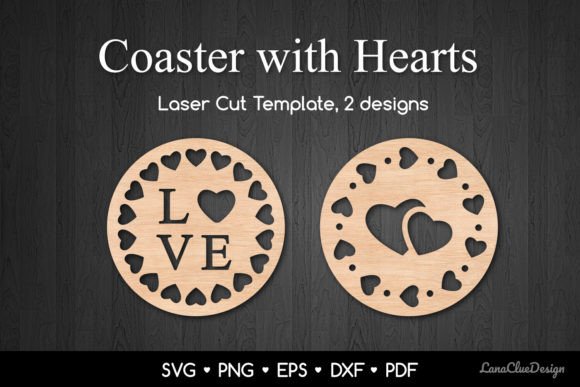
There is a distinct satisfaction in creating something tangible that adds warmth to a home, whether it is a set of decorative coasters for a wedding favor or a charming wall panel for a kitchen refresh. At the heart of many successful DIY projects lies the quality of the digital template used. The Decorative Coasters with Hearts SVG collection offers two unique designs tailored for laser cutting, plotter work, and CNC machining. However, simply downloading a file is not enough to guarantee a professional result. Many creators, from hobbyists to small business owners, overlook critical details in file selection and machine setup, leading to wasted materials and frustrated deadlines. Understanding how to properly utilize these vector assets can mean the difference between a rough prototype and a polished product ready for sale or gifting.
Understanding the Versatility of Heart-Themed Vector Designs
The appeal of heart motifs in home decor is timeless, bridging the gap between romantic wedding themes and cozy everyday interiors. These specific designs are engineered to function as both functional coasters and decorative panels. When you acquire this package, you receive a comprehensive zip file containing SVG, EPS, PDF, PNG, and DXF formats. This variety is intentional, catering to different software ecosystems and hardware capabilities. For instance, a Cricut or Silhouette user will likely rely on the SVG files for their intuitive layering capabilities, while a laser engraver operator might prefer the precision of the DXF or EPS files for path definition.
Many beginners make the mistake of assuming all vector files behave identically across every machine. This misunderstanding often leads to import errors or lost detail. A design that looks perfect on your screen may cut poorly if the wrong file format is chosen for your specific hardware. The inclusion of multiple formats in this bundle is a safeguard against such issues, but it requires the user to know which extension suits their workflow. Ignoring this nuance can result in jagged edges, incomplete cuts, or software crashes that halt production entirely.
Common Pitfalls in File Selection and Machine Setup
One of the most frequent errors occurs when users attempt to use raster images (like the included PNG) for cutting tasks. While the PNG files are excellent for sublimation printing or digital mockups, they lack the mathematical paths required for a laser or plotter to follow. Trying to auto-trace a PNG within cutting software often introduces unnecessary nodes and irregularities that degrade the final cut quality. Instead, always prioritize the SVG or DXF files for any physical cutting application. This ensures clean lines and accurate dimensions, which are crucial when fitting pieces together for layered coaster designs.
Another overlooked aspect is the scaling of the design relative to the material thickness. These templates are designed with specific tolerances in mind. If you resize the Decorative Coasters with Hearts SVG without adjusting your machine's kerf compensation, you may find that interlocking parts do not fit snugly. For laser cutters, the beam width removes a small amount of material; failing to account for this can leave gaps in assembled panels. Similarly, CNC users must consider the bit diameter. A common corrective approach is to run a test cut on scrap material of the exact same thickness before committing to your final stock. This simple step saves money and preserves the integrity of your premium materials like walnut, acrylic, or cork.
Material Choices and Their Impact on Final Quality
The beauty of a vector design is only fully realized when paired with the appropriate material. A frequent misstep among new entrepreneurs is selecting materials that are incompatible with their cutting method or the intricacy of the design. Heart shapes, especially those with fine internal details, require materials that hold their structural integrity during the cutting process. Thin veneers might warp under high heat from a laser, while overly dense hardwoods might cause burn marks if the speed and power settings are not calibrated correctly.
For kitchen decor and coasters, durability and water resistance are paramount. Using untreated porous wood without a proper sealant can lead to staining and warping after the first use. A better approach involves selecting pre-sealed blanks or applying a food-safe finish post-cutting. Additionally, when creating wall art panels, consider the weight of the material. A large decorative panel cut from thick MDF may require reinforced mounting hardware, whereas a lighter acrylic version might hang effortlessly. Evaluating the end-use environment before cutting prevents the disappointment of a beautiful piece that fails functionally.
Maximizing Efficiency in Production Workflows
For those looking to scale their production, efficiency is key. A common bottleneck is poor nesting of the design files on the material sheet. Users often place the two heart designs haphazardly, leading to excessive waste. Most cutting software includes nesting tools that automatically arrange shapes to minimize offcuts. Taking the time to learn these features can significantly reduce material costs over time. Furthermore, organizing your digital workspace by keeping the original EPS and PDF files as master backups ensures you always have a pristine version to return to if an edit goes wrong.
It is also vital to check the layer structure within the SVG files before sending them to the cutter. Sometimes, design elements intended for engraving versus cutting are grouped on the same layer. Separating these into distinct color-coded layers allows for a seamless workflow where the machine knows exactly when to switch from cutting to etching. This level of preparation transforms a potentially confusing job into a streamlined operation, allowing you to produce batches of coasters or panels with consistent quality.
- Verify File Integrity: Always open the SVG and DXF files in your design software immediately after download to ensure no nodes are missing or corrupted.
- Test Settings: Run power and speed tests on scrap pieces of your actual material to determine the optimal settings for clean cuts.
- Consider Finish: Plan your sanding, sealing, or painting process before cutting to avoid damaging delicate heart details later.
- Check Dimensions: Measure the digital file against your physical material size to ensure efficient layout and minimal waste.
Ultimately, the value of the Decorative Coasters with Hearts SVG bundle lies not just in the aesthetic appeal of the hearts, but in the precision and flexibility it offers the maker. By avoiding common technical pitfalls and respecting the nuances of different file formats and materials, you can elevate your projects from amateur experiments to professional-grade creations. Whether you are crafting a single gift for a loved one or manufacturing inventory for a boutique, attention to these details ensures that your final output reflects the care and skill you put into the process.