Elevating Design Precision: The Strategic Role of Decorative Laser Cut Patterns in Modern Creativity
In the evolving landscape of digital fabrication and creative design, the demand for precision, intricacy, and aesthetic versatility has never been higher. At the heart of this transformation lies the Decorative Laser Cut Pattern, a fundamental asset that bridges the gap between conceptual artistry and tangible production. For professionals ranging from interior architects to independent crafters, these patterns represent more than just digital files; they are the blueprints for innovation, enabling the creation of complex structures that were once impossible or prohibitively expensive to produce by hand.
The integration of Decorative Laser Cut Patterns into professional workflows signifies a shift towards democratized manufacturing. Whether utilized for high-end architectural facades or delicate jewelry embellishments, these assets empower creators to execute visions with mathematical exactitude. The modern creator does not merely seek a design; they seek a solution that is scalable, adaptable, and ready for immediate deployment across various materials and industries.
The Convergence of Art and Engineering
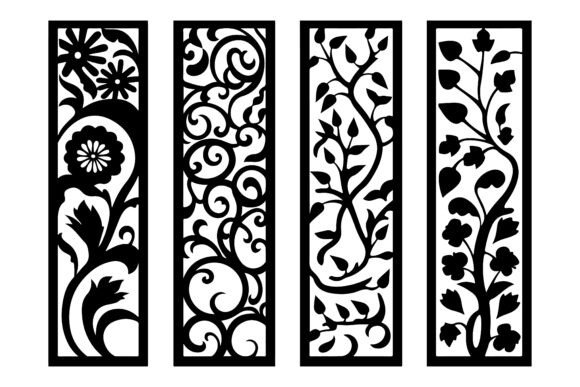
Understanding what constitutes a high-quality Decorative Laser Cut Pattern requires looking beyond the surface aesthetics. These are sophisticated vector-based designs engineered to withstand the physical constraints of laser cutting machinery while maintaining artistic integrity. A superior pattern balances negative and positive space, ensuring structural stability whether it is being cut into flexible plywood, acrylic, metal, or cardstock.
The industry standard has shifted towards comprehensive bundles that offer multiple file formats, such as PNG, EPS, and JPG. This multi-format approach is critical for interoperability. While vector files like EPS ensure scalability without loss of resolution—essential for large-scale architectural applications—raster formats like high-resolution PNGs (often at sizes like 4500×5400 pixels) provide immediate visual references for marketing materials, mockups, and digital presentations. This duality allows entrepreneurs and marketers to visualize the end product before a single piece of material is cut, streamlining the client approval process.
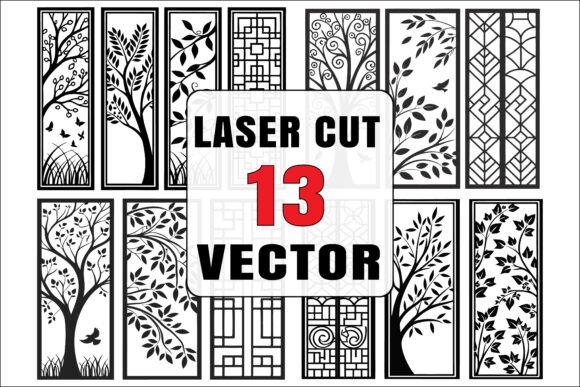
Furthermore, the complexity of these designs has increased dramatically. We are seeing a move away from simple geometric lattices toward intricate filigree, floral mandalas, and abstract symmetrical compositions. This evolution reflects a consumer preference for personalized, bespoke items that carry a sense of luxury and craftsmanship. The ability to access a library of 13 or more distinct, high-fidelity patterns allows designers to curate unique collections without the time-intensive burden of drafting every curve from scratch.
Transforming Interior Architecture and Home Decor
One of the most significant impacts of Decorative Laser Cut Patterns is visible in the realm of interior architecture and home decor. The trend towards open-concept living spaces has created a need for functional dividers that define space without blocking light or air flow. Laser-cut room dividers and wall panels have become staple elements in modern design, offering privacy with an artistic flair.
Professionals in this sector utilize these patterns to create custom lampshades that cast intricate shadows, transforming ambient lighting into a dynamic design feature. Similarly, decorative facades on cabinetry or feature walls add texture and depth to otherwise flat surfaces. The use of flexible plywood and other bendable materials has expanded the possibilities, allowing these rigid geometric or floral designs to wrap around curved columns or create organic, flowing structures.
For the DIY enthusiast and the professional decorator alike, the availability of customizable panels means that home decor is no longer limited to mass-produced inventory. A Door Name Plate or a Welcome Sign can be tailored to match the specific typography and ornamental style of a residence, creating a cohesive brand identity for hospitality businesses or a personal signature for private homes. This level of customization drives value, turning standard functional items into conversation pieces.
Revolutionizing Product Design and Fashion
Beyond the home, the influence of Decorative Laser Cut Patterns extends deeply into product design and the fashion industry. In fashion, the technique allows for the creation of lightweight, breathable, yet structurally sound embellishments for clothing and accessories. Designers are increasingly incorporating laser-cut leather and fabric details that mimic traditional lace but with a modern, sharp edge that only digital precision can achieve.
In the realm of jewelry, these patterns enable the production of intricate pendants, earrings, and brooches that would be incredibly labor-intensive to craft manually. The precision of the laser ensures that every cut is identical, which is vital for brand consistency when producing batches of products. Moreover, the application of these patterns in packaging design elevates the unboxing experience. A simple box transformed by a laser-cut sleeve featuring an ornamental lattice design can significantly enhance perceived value, a crucial factor for marketers and e-commerce entrepreneurs.
The versatility of these files supports a wide array of materials. From rigid acrylics used in coasters and tech accessories to delicate papers used in high-end greeting cards, the underlying pattern remains the constant driver of quality. This adaptability makes the investment in a comprehensive bundle of Laser Cut SVG Files and vector assets highly efficient for businesses looking to diversify their product lines without diversifying their design overhead.
Streamlining Workflows for Creators and Entrepreneurs
The modern creative economy demands efficiency. Freelancers and small business owners cannot afford to spend weeks drafting complex vectors for every new project. This is where the strategic value of pre-made, high-quality Decorative Laser Cut Patterns becomes undeniable. By leveraging ready-to-use assets, creators can focus their energy on material selection, finishing techniques, and marketing, rather than getting bogged down in the initial design phase.
Consider the workflow of a scrapbooking artist or a paper art specialist. Access to a library of Floral Designs and Geometric Patterns allows for rapid prototyping. They can test different scales and arrangements digitally before committing to costly materials. Similarly, for architects and engineers, having access to detailed Lattice and Filigree files accelerates the rendering process, allowing for quicker client presentations and faster project turnaround times.
The inclusion of various file types in a single bundle addresses the fragmented nature of design software. Whether a user operates in Adobe Illustrator, CorelDRAW, or specialized CNC control software, the availability of EPS, SVG, and DXF-compatible structures ensures compatibility. This reduces friction in the production pipeline, minimizing errors caused by file conversion and ensuring that the final cut matches the digital preview perfectly.
Meeting the Demand for Personalization and Craft
We are currently witnessing a cultural resurgence in the appreciation of handmade and customized goods. Consumers are moving away from generic, factory-made items in favor of products that tell a story or reflect individual taste. Decorative Laser Cut Patterns are the enablers of this movement. They allow for the mass customization of items like birth announcements, wedding invitations, and commemorative plaques.
The ability to modify a base pattern—adding names, dates, or altering specific motifs—creates a sense of ownership for the buyer. For instance, a Laser Cut Door Name Plate is not just a sign; it is a welcoming gesture that sets the tone for a home or business. The intricate details possible with laser cutting add a layer of sophistication that resonates with discerning customers who value craftsmanship.
Moreover, the educational sector has embraced these tools. Schools and makerspaces use these patterns to teach principles of geometry, physics, and design thinking. Students learn how two-dimensional patterns translate into three-dimensional structures, fostering a new generation of innovators who are comfortable with both digital tools and physical making.
Future-Proofing Creative Assets
As technology advances, the relevance of Decorative Laser Cut Patterns only grows. With the advent of more affordable and precise desktop laser cutters, the barrier to entry for utilizing these designs continues to lower. This democratization means that the market for laser-cut goods is expanding, creating new opportunities for niche products and specialized services.
For the forward-looking professional, investing in a robust collection of these patterns is an investment in flexibility. Whether the trend shifts towards maximalist ornamentalism or minimalist geometric abstraction, a diverse portfolio of assets ensures readiness. The key lies in selecting patterns that are not only visually striking but also technically sound—optimized for kerf width, material thickness, and structural integrity.
In conclusion, Decorative Laser Cut Patterns are much more than digital commodities; they are essential tools in the modern maker's toolkit. They facilitate a seamless blend of art and engineering, empowering creators to push the boundaries of what is possible in wood, metal, paper, and fabric. By integrating these high-quality, versatile assets into their workflows, professionals can meet the rising consumer demand for customization, quality, and unique design, securing their place in a competitive and rapidly evolving marketplace.