Pineapple One Continuous Line: A Minimalist Design Concept
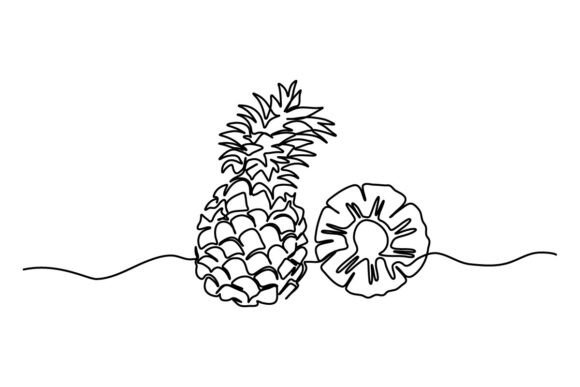
The appeal of the Pineapple One Continuous Line lies in its deceptive simplicity. At first glance, it appears to be a quick sketch, a single stroke capturing the essence of a tropical fruit. However, for designers and creators, this style represents a disciplined approach to visual communication. It strips away unnecessary details, shadows, and complex shading to reveal the fundamental structure of the subject. This fruits symbol design concept is not just about drawing a pineapple; it is about mastering flow, economy of line, and the ability to convey recognition through minimalism.
When you work with decorative elements drawn on a white background, you are engaging with negative space as actively as the ink itself. The white background is not merely an empty canvas; it is a crucial component that allows the continuous line to breathe. This high-contrast aesthetic ensures that the design remains legible whether it is scaled down for a mobile app icon or enlarged for a storefront sign. The result is a versatile asset that fits seamlessly into modern branding, where clarity and speed of recognition are paramount.
The Art of Unbroken Flow
Creating a Pineapple one continuous line design requires a specific mindset. Unlike traditional illustration, where you might build up layers or lift your pen to correct a curve, continuous line art demands commitment. Every curve of the pineapple's body and every spike of its crown must connect without breaking the path. This constraint forces the artist to prioritize the most defining features of the fruit. You cannot rely on texture to sell the image; you must rely on silhouette and rhythm.
This technique offers several practical benefits for professional projects. First, it creates a sense of movement. The eye naturally follows the path of the line from start to finish, creating a dynamic viewing experience even in a static image. Second, it ensures scalability. Because there are no tiny details to get lost when resizing, these designs maintain their integrity across various mediums. Whether you are printing on fabric or displaying on a retina screen, the bold strokes remain crisp and effective.
Versatile Applications for Modern Creators
The utility of this design style extends far beyond simple decoration. For entrepreneurs and small business owners, a continuous line pineapple can serve as a distinctive logo mark. It suggests freshness, hospitality, and a touch of whimsy without feeling cluttered. Consider a juice bar or a wellness brand; the organic flow of the line mirrors the natural origins of the product, while the minimalist execution speaks to modern sophistication.
Bloggers and content creators can utilize these graphics to break up text and add visual interest to articles without distracting from the core message. Because the design is typically monochromatic and set against a white background, it integrates effortlessly into existing color schemes. You can overlay the line art on colored blocks, use it as a watermark, or animate it for social media stories. The simplicity allows for endless customization.
Educators and publishers will find value in the clarity of this style. When explaining botanical concepts or creating instructional materials, a continuous line diagram removes the confusion of realistic shading. It focuses the learner's attention on the shape and structure of the pineapple. Furthermore, these designs are excellent for coloring books or interactive worksheets, inviting users to engage with the art by adding their own colors within the defined boundaries.
Technical Formats and Usability
Understanding the file formats available for these designs is critical for maximizing their potential. When you acquire a Pineapple One Continuous Line asset, you will typically receive a package containing EPS, SVG, and JPG files. Each format serves a distinct purpose in your workflow.
- SVG (Scalable Vector Graphics): This is often the most valuable format for digital projects. As a vector file, it uses mathematical paths rather than pixels, meaning you can scale the image to any size without losing quality. It is ideal for web design, responsive layouts, and cutting machines like Cricut or Silhouette for vinyl decals.
- EPS (Encapsulated PostScript): This is the industry standard for print professionals. If you are sending your design to a commercial printer for business cards, packaging, or large-format banners, the EPS file ensures that the lines remain sharp and the colors accurate. It is compatible with major design software like Adobe Illustrator and CorelDRAW.
- JPG (Joint Photographic Experts Group): While raster-based, the JPG version provides a ready-to-use image for quick insertion into documents, presentations, or social media posts where vector editing is not required. It offers immediate usability for non-designers who need a clean graphic instantly.
Having access to all three formats ensures that you are never limited by technical constraints. You can start with a JPG for a quick mockup, switch to SVG for website implementation, and finalize with EPS for high-resolution printing. This flexibility is essential for freelancers and agencies managing diverse client needs.
Adapting the Concept for Different Audiences
To keep your results original and audience-friendly, consider how you adapt the base design. A continuous line pineapple does not have to look the same in every context. You can vary the line weight to change the mood; a thicker line feels bold and confident, suitable for sports branding or streetwear, while a hairline stroke feels elegant and delicate, perfect for luxury stationery or wedding invitations.
You can also experiment with the degree of abstraction. Some interpretations may strictly follow the botanical accuracy of the fruit, ensuring the cross-hatching pattern of the skin is recognizable. Others might take a more interpretive approach, using loops and swirls that suggest the form of a pineapple without explicitly drawing every detail. This artistic license allows you to tailor the design to specific brand personalities. A tech startup might prefer a geometric, angular interpretation, whereas a yoga studio might opt for soft, organic curves.
Consistency is key when integrating these elements into a larger project. If you use a continuous line pineapple as part of a series of fruit icons, ensure that the line weight, style, and level of detail match the other items in the set. This creates a cohesive visual language that strengthens brand recognition. Do not mix hyper-realistic photos with minimalist line art unless there is a deliberate stylistic reason to do so.
Practical Inspiration for Your Next Project
If you are looking for concrete ways to implement this concept, consider the following approaches:
- Packaging Design: Use the line art as a subtle pattern on product packaging. Repeating the continuous line pineapple in a tiled formation can create a textured background that feels premium yet playful.
- Digital Stickers and Emojis: Convert the SVG into custom stickers for messaging apps. The clear outlines make them perfect for die-cut stickers that can be applied to laptops or water bottles.
- Apparel Branding: Place a large-scale version on the back of a t-shirt or a small pocket-sized version on a cap. The single-line style translates beautifully to embroidery and screen printing.
- Wall Art and Decor: Frame the high-resolution JPG or print the EPS on canvas for home decor. The minimalist aesthetic fits well in Scandinavian or modern interior design styles.
Ultimately, the Pineapple one continuous line design is a tool for clear communication. It proves that you do not need complexity to make an impact. By focusing on the essentials and embracing the constraints of a single stroke, you create visuals that are timeless, adaptable, and universally understood. Whether you are a seasoned graphic designer or a hobbyist exploring new creative avenues, mastering this style adds a valuable skill to your repertoire. It encourages you to look at familiar objects with fresh eyes, finding the beauty in the simplest of forms.
Remember, the goal is not just to produce an image, but to solve a visual problem. Does the design convey the right message? Is it legible at different sizes? Does it fit the brand's voice? When you answer these questions affirmatively, you have successfully leveraged the power of continuous line art. Let the flow of the line guide your creativity, and allow the simplicity of the pineapple to bring a touch of warmth and clarity to your projects.