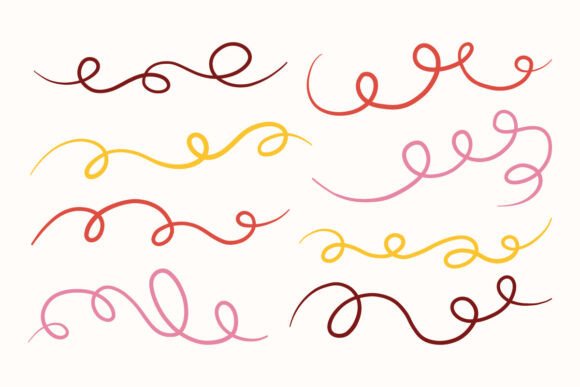
Strategic Application of Decorative Swirl Line Patterns in Modern Branding
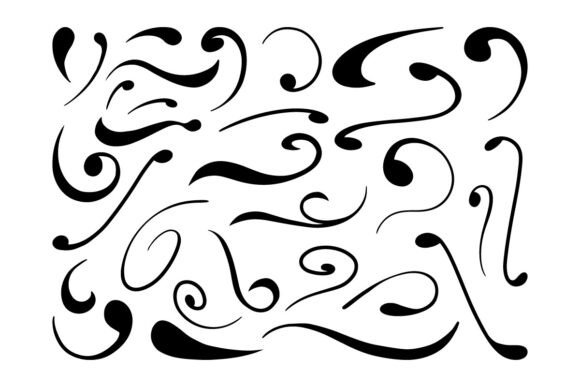
In the landscape of visual communication, every element serves a specific function, whether it is to inform, persuade, or guide the viewer's eye. Decorative swirl line patterns are often misunderstood as mere ornamental fillers, yet when deployed with strategic intent, they become powerful tools for establishing tone, directing attention, and enhancing brand perception. This collection of eight unique swirl line designs offers more than just aesthetic variety; it provides a versatile toolkit for entrepreneurs, marketers, and creatives who need to elevate their projects without compromising professionalism. The key lies not in the abundance of decoration, but in the precision of its application.
When you integrate these vector-based assets into your workflow, you are making a decision about how your audience perceives your message. A well-placed swirl can soften a rigid layout, create a sense of movement, or frame critical information to ensure it is not overlooked. The included file formats—EPS, JPG, PNG, and SVG—ensure that these patterns adapt seamlessly to both digital interfaces and high-resolution print media, allowing for consistent branding across all touchpoints.
Defining the Strategic Value of Ornamental Lines
To understand the utility of decorative swirl line patterns, one must first look beyond their surface appearance. These elements act as visual connectors. In a world where attention spans are fragmented, guiding the reader through content is a primary objective. Swirls function as subtle cues that lead the eye from a headline to a body of text, or from a product image to a call-to-action button. They reduce cognitive load by organizing space and creating a natural flow that feels intuitive rather than forced.
Furthermore, these patterns contribute significantly to brand positioning. A brand that utilizes elegant, flowing lines may be perceived as sophisticated, approachable, or artisanal, depending on the specific design chosen from the set. Conversely, a lack of such detailing can sometimes result in a sterile or overly corporate feel that fails to resonate with consumers seeking authenticity. By selecting the appropriate swirl design, you align your visual identity with your core values, ensuring that your communication supports your long-term business goals.
Enhancing Communication Through Visual Hierarchy
Effective communication relies heavily on hierarchy. You must decide what information is paramount and what serves as support. Decorative swirl line patterns excel at establishing this hierarchy without the need for aggressive bolding or oversized fonts. Consider an invitation suite or a professional certificate; the use of a corner flourish or a dividing line can elevate the perceived value of the document instantly. It signals to the recipient that care was taken in the creation of the piece, which translates to a higher perceived value of the event or achievement being recognized.
In marketing materials, such as brochures or social media graphics, these patterns can separate distinct sections of content. Instead of relying solely on white space, which can sometimes feel empty if not managed well, a delicate swirl line provides structure. It defines boundaries while maintaining an open and airy feel. This balance is crucial for maintaining reader engagement, as it prevents the layout from feeling cluttered while ensuring that different ideas are clearly demarcated.
Practical Applications Across Industries
The versatility of this eight-design collection allows for application across a wide spectrum of industries. For wedding planners and event coordinators, these patterns are indispensable for creating cohesive stationery suites that reflect the elegance of the occasion. For small business owners launching a new product, incorporating these swirls into packaging design can add a premium touch that justifies a higher price point. Educators and publishers can use them to break up dense text in worksheets or textbooks, making the material more inviting and less intimidating for students.
Freelancers and graphic designers will find particular value in the scalability of the EPS and SVG files. Whether designing a massive billboard or a tiny favicon, the vector nature of these assets ensures crisp edges and perfect rendering at any size. This technical reliability removes the risk of pixelation, a common pitfall that can undermine the professionalism of a final deliverable. The ability to recolor these lines to match specific brand palettes further enhances their utility, allowing for seamless integration into existing style guides.
- Invitations and Stationery: Use corner elements to frame text and central dividers to separate event details.
- Branding and Logos: Incorporate subtle swirls as monogram accents or background textures to add depth.
- Digital Content: Employ PNG versions with transparent backgrounds for website headers or blog post separators.
- Packaging Design: Utilize repeating patterns to create custom wrapping paper or box liners that enhance the unboxing experience.
Planning Your Design Integration
Before dropping a swirl pattern into your project, take a moment to evaluate your objectives. What is the primary goal of this specific piece of communication? If the goal is to convey urgency or stark facts, heavy ornamentation might be counterproductive. However, if the goal is to evoke emotion, celebrate a milestone, or establish a luxury feel, then decorative swirl line patterns are highly effective. Planning involves matching the complexity of the swirl to the complexity of the message. Simple, clean lines work best for modern, minimalist brands, while more intricate flourishes suit traditional or romantic themes.
It is also essential to consider the medium. Print projects allow for finer details that might get lost on low-resolution screens. When designing for mobile devices, opt for bolder, simpler curves from the collection to ensure visibility on smaller displays. The inclusion of JPG and PNG formats alongside vectors facilitates quick prototyping, allowing you to test different placements before committing to the final vector edit. This iterative process ensures that the final output is not just beautiful, but functional.
Risks of Indiscriminate Use
While these assets are powerful, they are not a cure-all for poor design. The most significant risk lies in using decoration to mask a lack of substance or poor layout fundamentals. If the underlying typography is weak or the color contrast is insufficient, adding swirls will only distract from these issues, not fix them. Over-decoration can lead to visual noise, making it difficult for the audience to focus on the core message. This is particularly dangerous in informational contexts where clarity is paramount.
Another potential pitfall is inconsistency. Using a different swirl style on every page of a document or every post in a social media campaign can make a brand appear unfocused and amateurish. Strategic use requires discipline. Select one or two patterns from the eight-design set that align with your brand identity and stick to them. Consistency builds recognition; when customers see a specific type of flourish, they should immediately associate it with your brand. Randomly swapping styles dilutes this association and weakens brand equity.
Making Intentional Design Decisions
To use decorative swirl line patterns intentionally, treat them as functional components of your design system. Ask yourself: Does this line guide the eye? Does it balance the composition? Does it reinforce the mood? If the answer to these questions is no, the element should likely be removed. Good design is often about subtraction as much as addition. The presence of these patterns should feel inevitable, as if the layout would be incomplete without them, rather than appearing as an afterthought.
Consider the psychological impact of curves. Unlike sharp angles which can suggest aggression or rigidity, swirls imply fluidity, growth, and organic movement. Leveraging this psychological association can help soften a brand's image or make a complex service feel more accessible. For instance, a financial advisor might use a subtle, stable swirl to suggest steady growth, while a spa might use flowing, water-like lines to evoke relaxation. Understanding these nuances allows you to manipulate the viewer's emotional response subtly but effectively.
Long-Term Value and Asset Management
Investing in a high-quality collection of vector assets like this set of eight unique designs pays dividends over time. Unlike stock photos that can become dated or overused, classic line art tends to remain timeless. By owning the files outright, you eliminate recurring licensing fees and gain the freedom to modify the assets as your brand evolves. This ownership supports long-term operational efficiency, as your team can access these resources instantly for new campaigns without needing to search for new elements.
Moreover, having a dedicated set of branded decorative elements streamlines the creative process. When a deadline approaches, having a go-to library of approved swirls accelerates production. Designers spend less time searching for suitable graphics and more time refining the overall composition. This efficiency translates to faster turnaround times for clients and the ability to handle a higher volume of work without sacrificing quality. In this sense, the collection is not just a design tool, but a productivity asset.
Ultimately, the successful deployment of decorative swirl line patterns hinges on a mindset of purposeful creation. It is about recognizing that every pixel and every curve contributes to the narrative you are telling. By approaching these elements with a strategist's eye, you transform simple lines into compelling visual arguments that support your goals, engage your audience, and stand the test of time. Whether you are crafting a wedding invitation, designing a logo, or laying out a annual report, let these patterns serve as the silent ambassadors of your brand's quality and intention.